
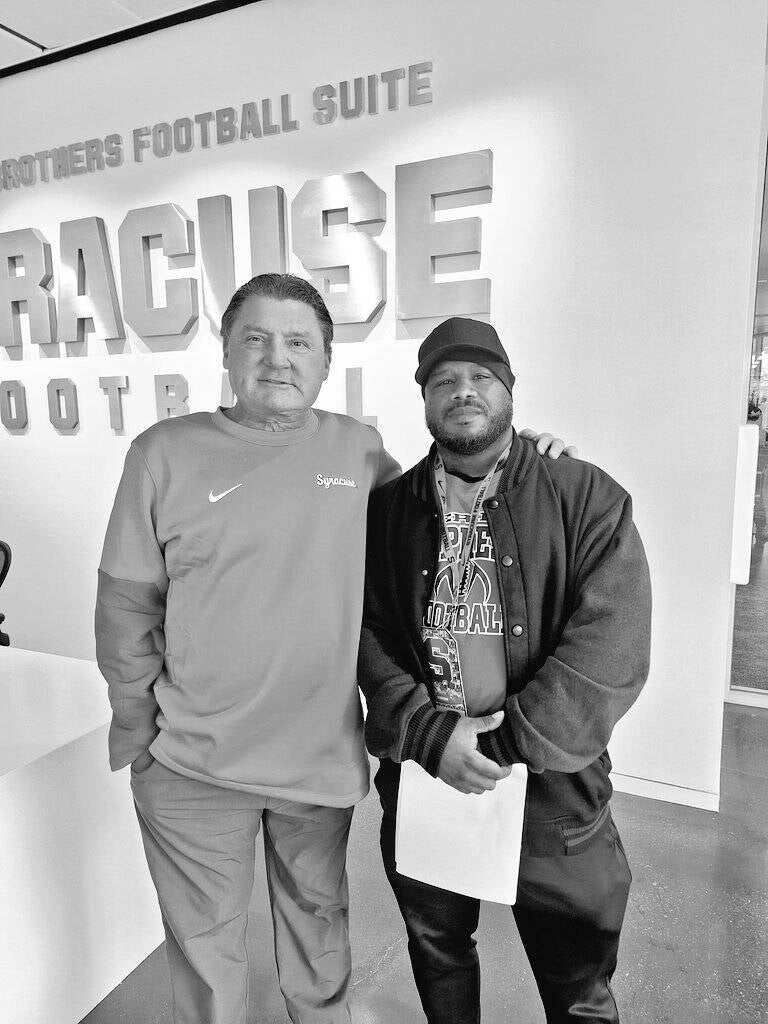
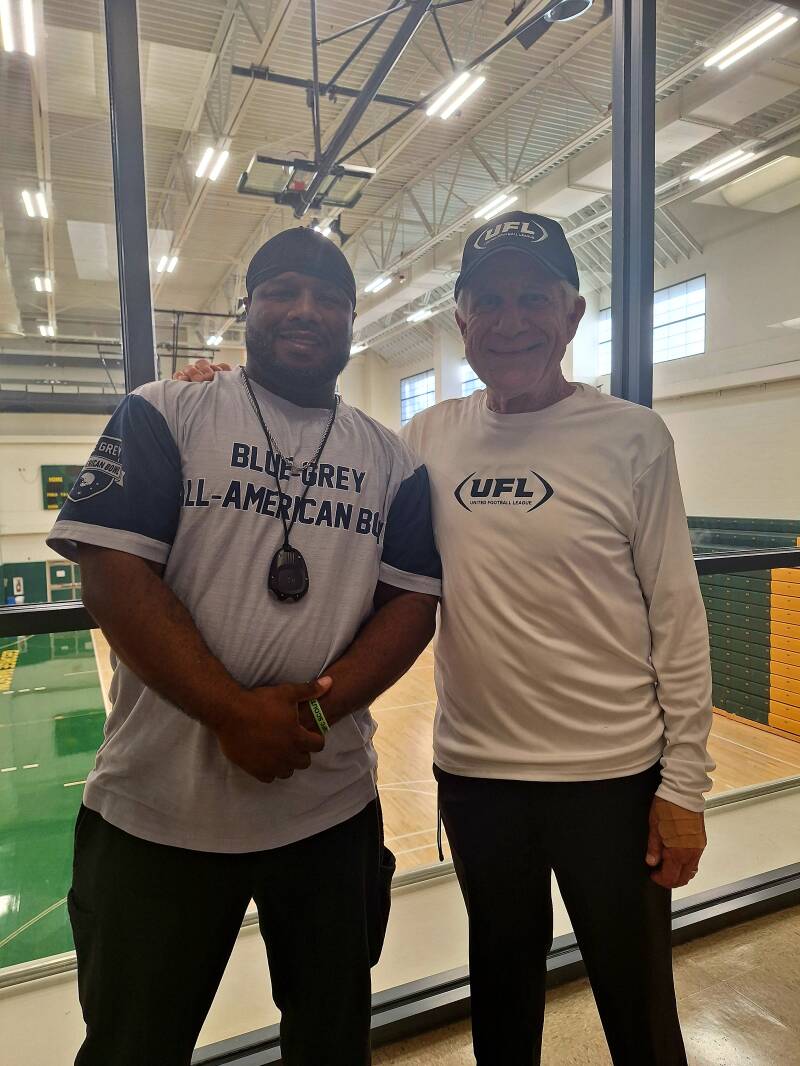
Coach James Zigler
By: Haroun Savage (NCMFC Staff)
Growing up in Pittsburgh, James Zigler Sr. saw himself as a basketball player. Football was never really part of the plan. That changed after his family moved to Erie, Pennsylvania. In middle school, Zigler went to football tryouts with a group of friends simply looking to give the sport a chance. One of the coaches noticed him, pointed toward the equipment, and told him to go get a helmet and shoulder pads. Just like that, football became part of his life.
What Zigler could not have known at the time was that the coach who first encouraged him onto the field would help shape more than his playing career. Zigler later played for him at Central High School, sharing the field with talented athletes who would eventually reach the NFL. But the most important lessons were not always about football. His coach showed him what leadership looked like through his own example, while also placing responsibility on Zigler to become a leader among his teammates. Those lessons—accountability, communication, responsibility, and leading through action would eventually become central to Zigler's own coaching philosophy.
Zigler received recruiting interest coming out of high school, but trouble away from the field prevented him from taking the traditional college football path. Instead of allowing that chapter to completely close the door on the game, he eventually found another route. His playing career continued through indoor and developmental professional football, including time with the Pittsburgh RiverRats and winning 2 National Championships with the Erie Express. Those experiences exposed Zigler to another side of football—one where players were often fighting for opportunities, balancing real-world responsibilities, and trying to prove they belonged. In many ways, that environment would later influence the coach he became.
While still connected to the game as a player, Zigler began discovering another purpose in football. In 2017, he started coaching his son in youth football. He also began training his son and several of his teammates, working with young athletes who wanted to improve but did not always have access to advanced individual development. What started small began producing results.
Several of those athletes continued developing and eventually earned opportunities to play college football. More importantly, Zigler began to recognize that his greatest impact in the sport might not come from what he could accomplish as a player. It might come from what he could help someone else become. The transition felt natural because Zigler had always viewed coaching as a form of teaching.
His playing experience allowed him to communicate from the athlete's perspective. Instead of simply telling players what to do, he wanted them to understand why they were doing it, what they should feel, what they should see and how a technique would translate when the game became fast and chaotic. That philosophy has continued to evolve throughout his coaching career.
After his playing career ended, Zigler moved deeper into coaching, including work with special teams at the developmental level. That experience became its own kind of coaching classroom.
Developmental football does not always provide coaches with the resources, staffing or infrastructure available at the collegiate or professional level. Zigler learned quickly that coaching required more than knowing schemes on paper. It required adaptability.
He had to solve problems in real time, teach players with different experience levels, adjust personnel, communicate clearly and find ways to put athletes in position to succeed with the resources available. Those experiences helped shape one of Zigler's strongest beliefs:
A coach should never stop developing.
Zigler refers to that process as getting his “coaching reps.” And he has been deliberate about pursuing them. Rather than relying solely on his years playing and coaching the game, Zigler has continually sought opportunities to learn from environments above his current level. His professional development has included becoming UFL Scout School Certified, adding formal player-evaluation training and a more professional lens to how he assesses athletes. He was also selected as a candidate for the Tampa Bay Buccaneers National Coaching Academy, an opportunity designed to expose developing coaches to professional-level instruction, leadership, and football operations. Zigler has continued that pursuit through participation in professional coaching clinics, including learning opportunities connected with the Washington Commanders, Jacksonville Jaguars, and Pittsburgh Steelers where he was able to study teaching methods, organization, terminology, and philosophies being used at the NFL level.
He has also sought knowledge from coaches across professional football and the Power Four college level, continually adding ideas that can be adapted, not simply copied, to help the athletes he works with. His involvement with the Coalition has further expanded that professional network, allowing Zigler to connect with coaches, educators, and football professionals from different levels and backgrounds.
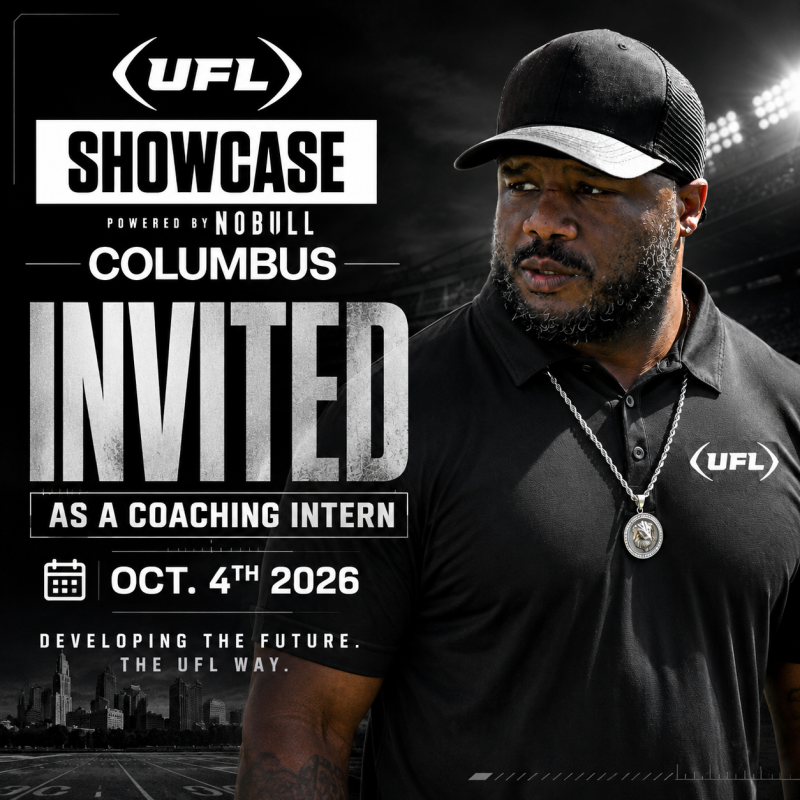
Most recently, he was invited by ANC to assist with the Columbus UFL Showcase, giving him another opportunity to work closer to the professional side of the sport while continuing to develop his understanding of player evaluation, talent identification, and what higher-level football organizations are looking for in athletes.
For Zigler, collecting credentials is not the objective. The value is what he can bring back with him. Every clinic, conversation, certification, evaluation opportunity, and professional football environment gives him another tool that can eventually benefit a young player standing on a field in Erie.
That mission has become increasingly important through Tier 1 Football Academy, the athlete-development program founded by Zigler. His vision is bigger than simply running workouts. Zigler wants to help build a legitimate developmental pathway that starts with fundamentals, progresses through position-specific development and athletic performance, and eventually helps athletes understand what will be required to reach high school, college, and potentially professional football. He believes too many young athletes are asked to compete before they are truly taught how to develop. Tier 1 is his attempt to help close that gap.
His experiences as a player, coach, evaluator, and student of the game now intersect in the way he teaches athletes. He wants players to improve technically and physically, but he also wants them to develop confidence, discipline, football intelligence, and accountability. Because every athlete's path is different. Some may play college football. Some may reach the professional level. Others may eventually discover that football's greatest contribution to their lives has little to do with where they played their final game. Zigler understands that personally.
He still draws inspiration from the coaches who shaped him. The coach who first told a middle-school basketball player to grab a helmet ultimately showed Zigler the power one coach can have on another person's direction in life. Zigler has also studied coaches such as Mike Tomlin, Kirby Smart, and others, paying particular attention not simply to strategy, but to how coaches communicate, build relationships, establish standards, and invest in their players as people. Those lessons matter because some of Zigler's most meaningful coaching moments have nothing to do with championships or recognition. They happen when something finally clicks. When an athlete who has struggled with a movement suddenly understands it. When a young player begins seeing the game differently. When confidence replaces uncertainty. When a player realizes he is capable of more than he previously believed. Those moments continue to remind Zigler why he coaches. Years ago, his grandfather gave him advice that has stayed with him: Strive to be the pebble that hits the pond and creates a ripple. That philosophy now defines much of Zigler's vision for football in Erie. He does not simply want to help one athlete receive an opportunity.
He wants that athlete's opportunity to inspire another athlete. He wants knowledge passed from one generation to the next. He wants players who succeed to eventually return and help someone behind them. One opportunity creates another. One relationship creates another. One athlete changes another athlete's belief about what is possible.
That is the ripple.
And Zigler hopes that, over time, those ripples can become something much larger—a stronger football-development culture and a clearer pathway for young athletes throughout Erie and the surrounding region. His own journey has certainly not followed a straight line. It began with a kid from Pittsburgh who thought basketball would be his sport. It continued through an unexpected introduction to football, missed opportunities, developmental and professional playing experience, youth coaching, championship environments, athlete development, and an intentional pursuit of higher-level coaching education.
Today, Zigler continues adding to that journey through professional certifications, NFL coaching-development opportunities, scouting and evaluation education, professional showcases, mentorship, and the continued growth of Tier 1 Football Academy. But the purpose remains remarkably similar to the lesson he learned from the coach who first handed him an opportunity:
Sometimes changing someone's future begins simply by opening a door.
Coach James Zigler Sr. is working to make sure more athletes have one to walk through
Create Your Own Website With Webador